
Subscribe to newsletter.
 = 
your information will be kept private
Breast Augmentation Special
Pediatric Procedures
Cleft Lip Cleft Palate Craniosynostosis
Pierre Robin Plagiocephaly Otoplasty (Ear)
Rhinoplasty (Nose) Scaphocephaly  
Cleft Lip

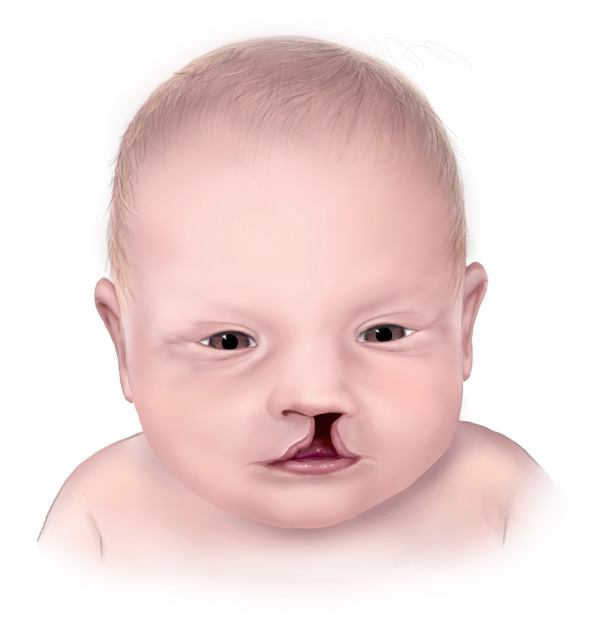
Cleft lip and cleft palate are birth defects affecting approximately  one out of every 800 babies.  With a cleft lip, the right and left sides of the lip do not grow together as normal, resulting in a separation of the upper lip.  A cleft palate is a similar birth defect in which the roof of the mouth does not close. 

Surgery can repair a cleft lip and help a child lead a normal, healthy and happy life.  There have been great advances made in the treatment of clefts.  Dr. Duboys is one of the only physicians in the United States performing cleft lip repair before the child leaves the hospital – usually at about one week of age.

If your child was born with a cleft lip or cleft palate, you should seek the help of a specialized team as early as possible.  A team approach can be essential in the treatment of cleft lips because, in many cases, the skills of several medical professionals are needed. 

Children born with cleft lips or cleft palates may not only need the opening repaired, they may also have associated dental, hearing, speech and hearing as well as psychological development that will need to be addressed.  There are Cleft Lip and Palate teams located across the country which may include a plastic surgeon, pediatrician, dentist, speech and language specialist, social worker, hearing specialist, ear-nose-throat specialist, psychologist, nurse and genetic counselor.  Dr. Duboys is the founder and Emeritus Director of the Cleft and Cranio-facial team at the State University of New York – Stony Brook Medical Center and has been performing cleft surgery since 1985.  Dr. Duboys has been traveling internationally for over twenty years volunteering his efforts performing and teaching cleft surgery.


While any surgery carries the risk of complications, the most common one associated with cleft lip surgery is asymmetry.  Occasionally, one side of the mouth and nose may not match the other and a second surgery may be necessary.   

Cleft lips can vary greatly, ranging anywhere from a slight notch in the red portion of the upper lip to a complete separation of the lip extending into the nose.  One or both sides of the upper lip may be affected.  Surgery is most often performed on children around the age of ten weeks and is always performed in a hospital setting.  General anesthesia is most often used.  If indicated, surgery may be performed at 3-7 days of age. 

During your initial consultation, Dr.  Duboys will discuss all details of the procedure and answer any questions that you may have..  Cleft lip surgery is, in most cases, covered by insurance and our staff can assist you with your insurance company. 

A cleft lip is a separation of the upper
lip that can extend into the nose. 
To repair a cleft lip, the surgeon will first make an
incision on each side of the cleft from
the lip to the nostril.
The cleft lip is then drawn together and
stitched to create a normal "cupid's bow"
shape to the upper lip.
The scar left after surgery
will gradually fade with time. 

During the surgery, an incision is made on either side of the cleft from the mouth into the nostril.  The dark pink outer portion of the cleft is then turned down and the muscle and skin of the lip are pulled together to close the separation.  This restores the “cupid’s bow” shape of the mouth as well as the muscle function.  Cleft lip is often associated with a nostril deformity that may be addressed during the surgery or in a later procedure. 

Stitches will either dissolve on their own or they will be removed after several days.  Medication can be prescribed to alleviate any discomfort, and elbow restraints may be necessary for several weeks to prevent the baby from rubbing the treated area.  The doctor will provide you with instructions on feeding your child for the first few weeks after surgery.  Surgical scars often appear larger and redder during the first few weeks after surgery but will eventually fade, often appearing barely noticeable. 

Ear infections can be prevalent among children with a cleft lip or cleft palate as the cleft may interfere with the normal function of the middle ear.  Because of this, the ear-nose-and-throat surgeon on the Cleft Palate Team may recommend that a small plastic ventilation tube be inserted in the eardrum to allow for proper drainage and air circulation. 

Furthermore, additional surgery may be recommended at a later date to refine the shape and function of the lip, nose, gums and palate. 

Home - Our Surgeons - Procedures - Photo Gallery - Med-Spa - Our Office - Contact Us

Cosmetic Procedures
Abdominoplasty | Rhinoplasty | Breast Reduction | Brow Lift | Blepharoplasty | Facelift | Facial Implants
Liposculpture | Otoplasty | Rhinoplasty | Breast Lift | Male Breast Reduction
Medispa

Chemical Peels
| Micro-Dermabrasion | Botox | IPL Photofacial | Laser Hair Removal | Skincare | Medispa | Photofacial
Reconstructive Procedures
Cheek Reconstruction | Moh's | Lip Reconstruction | Breast Reconstruction | Skin Cancer
Breast Augmentation | Breast Reconstruction | Cheeck Reconstruction | Cleft Lip | Cleft Palate | Lip Reconstruction | Male Breast Reduction | Nasal Surgery | Skin Cancer

864 West Jericho Turnpike | West Hills, New York 11743 | Tel: (631) 423-1000 | Fax: (631) 271-6900
Elliot B Duboys | Lawrence Sirota
Cosmetic and Reconstructive Plastic Surgeons serving Huntington, Suffolk County, Nassau County, Long Island, South Huntington,
Woodbury, Laurel Hollow, Huntington Station, Greenlawn, Melville, Plainview, Dix Hills, Cold Spring Harbor, and the surrounding area.
www.associatedplasticsurgeons.com
© 2008 Associated Plastic Surgeons | Privacy Policy

Our Surgeons Procedures Photo Gallery About UsPatient Testimonials Contact Us Cosmetic Procedures Reconstructive Procedures Pediatric Procedures Medi-Spa